This project explores how language operates as a form of power, and how it has been used to silence and marginalise women within institutional and everyday contexts. Through typographic investigation, I examine the ways women’s voices are interrupted, dismissed, reframed and often erased, not only historically but within contemporary spaces such as academia, the workplace and politics.
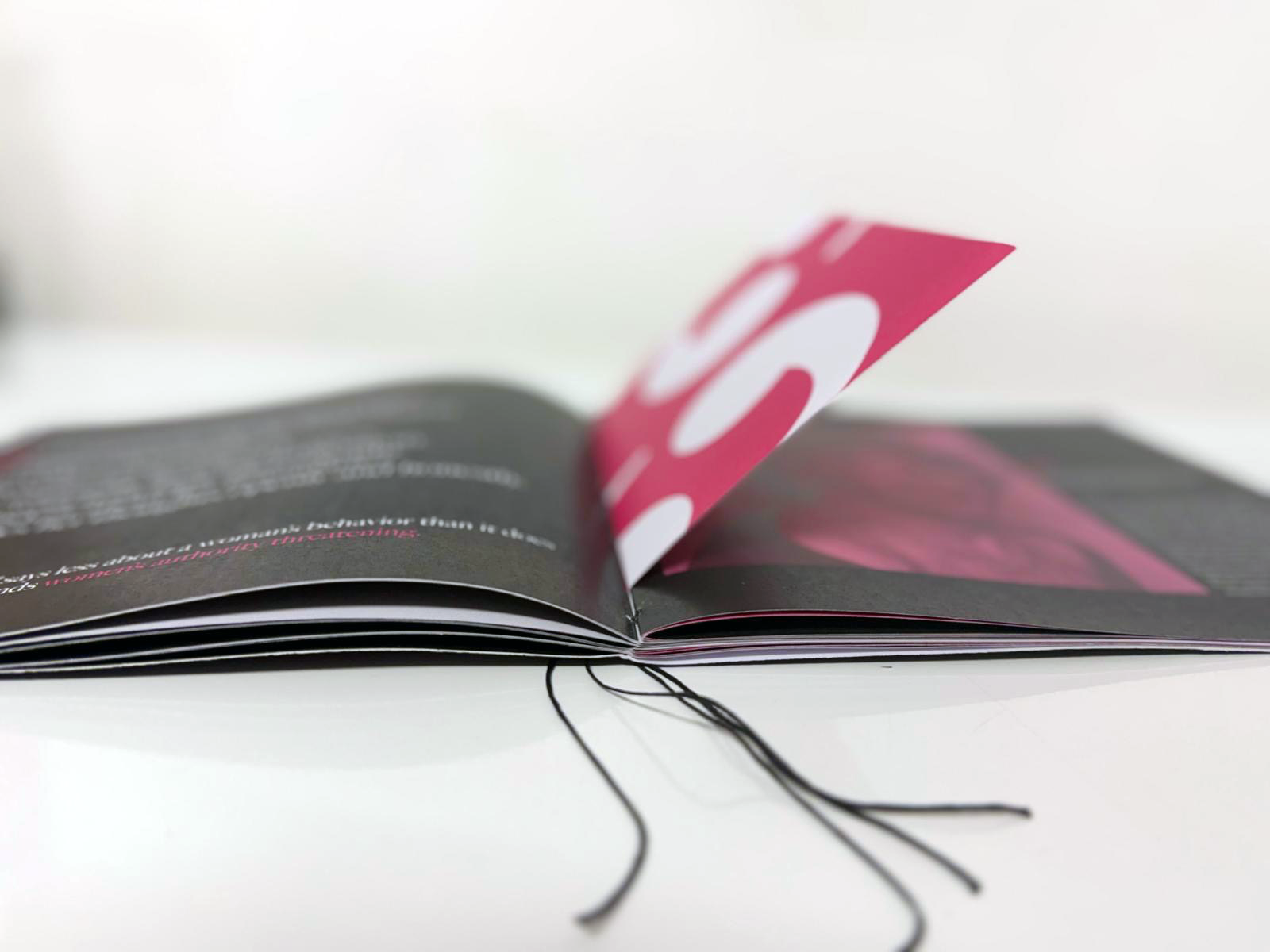
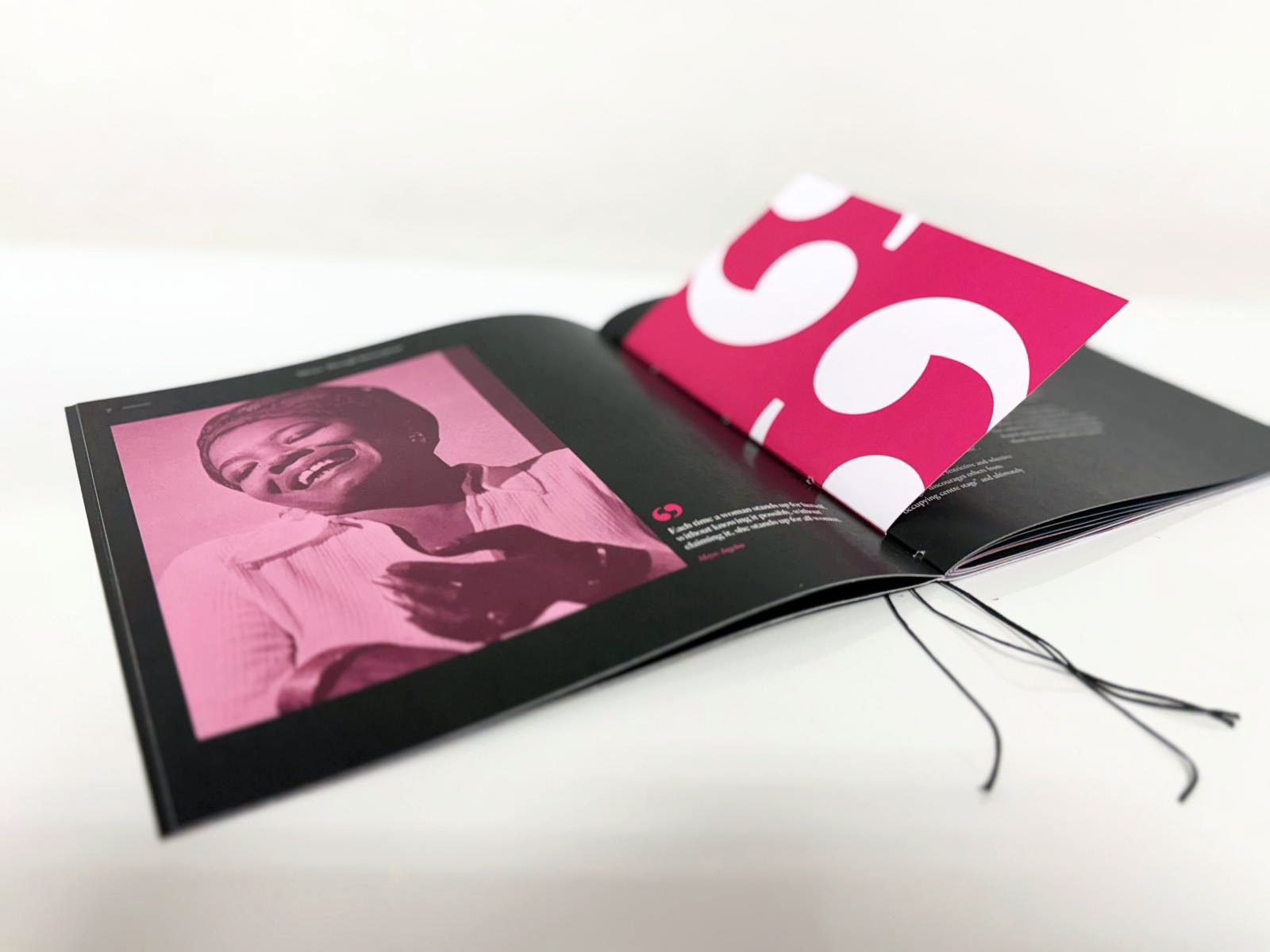
The outcome is a self bound publication that combines editorial structure with expressive typography. A structured grid system references institutional control, while moments of disruption, through scale, layering and handwritten interruption; represents resistance and the reclaiming of space. I used different typefaces to distinguish between voices that represent authoritative, system driven language to contrast with more human and expressive type to reflect women’s voices and experiences.
Primary research, including survey responses, is embedded throughout the publication using inserts and interruptions, giving physical presence to lived experiences. The material choices, binding, and production methods were also considered conceptually. These reject traditional authoritative finishes, supporting something more tactile and personal. Binding the publication myself became an intentional act, acknowledging the historical exclusion of women from book binding practices while reinforcing my own connection to the concept.
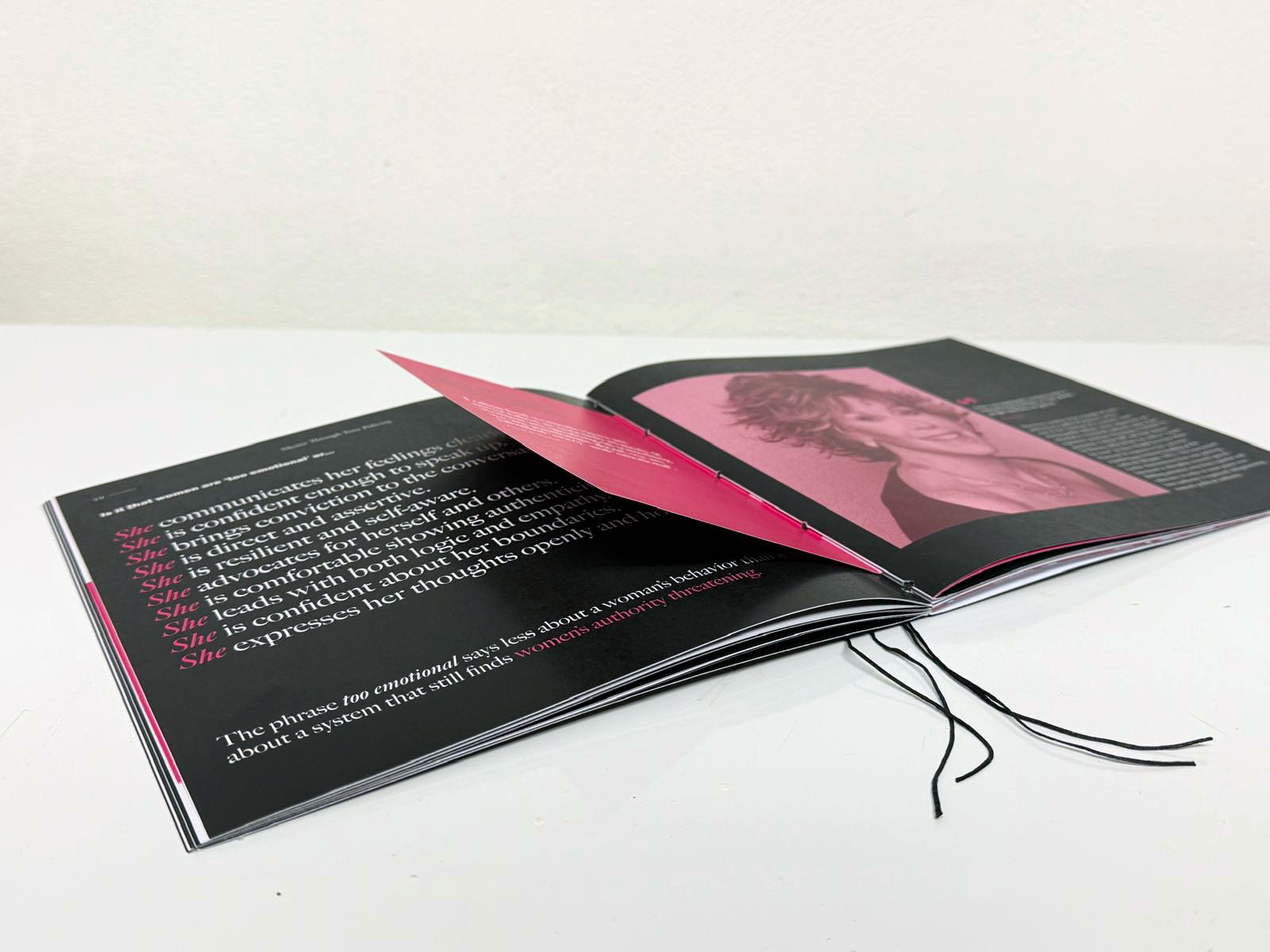
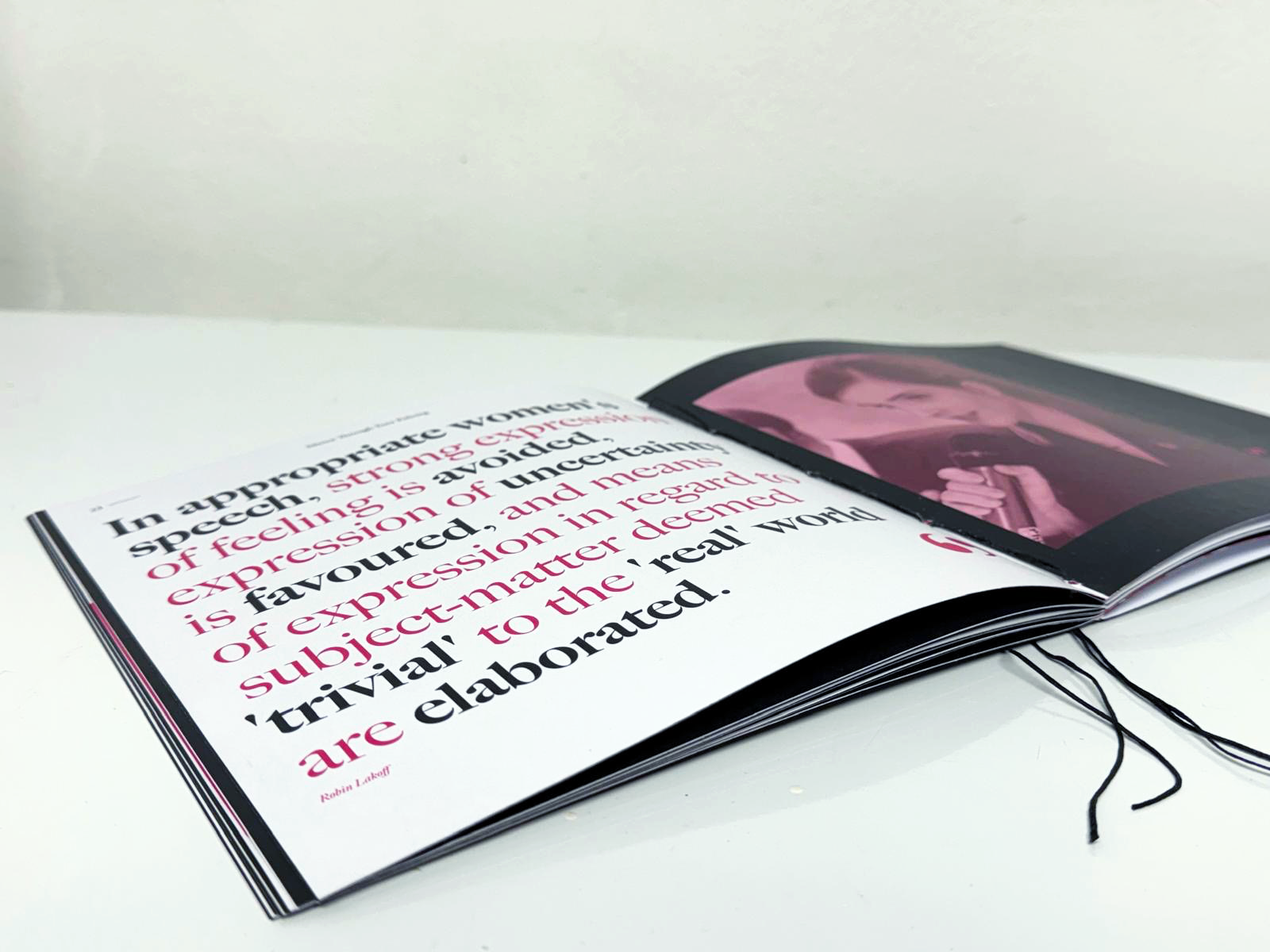
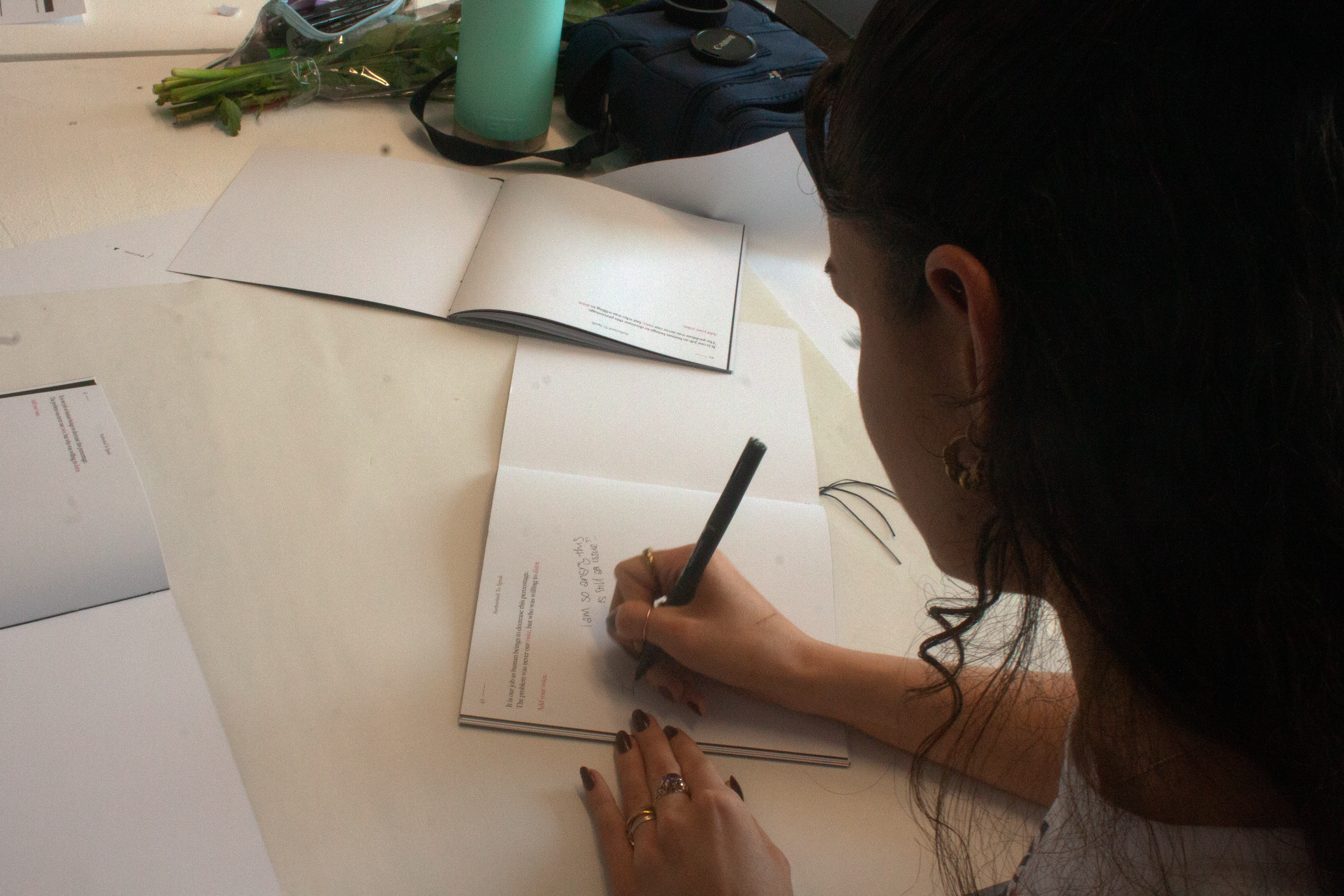
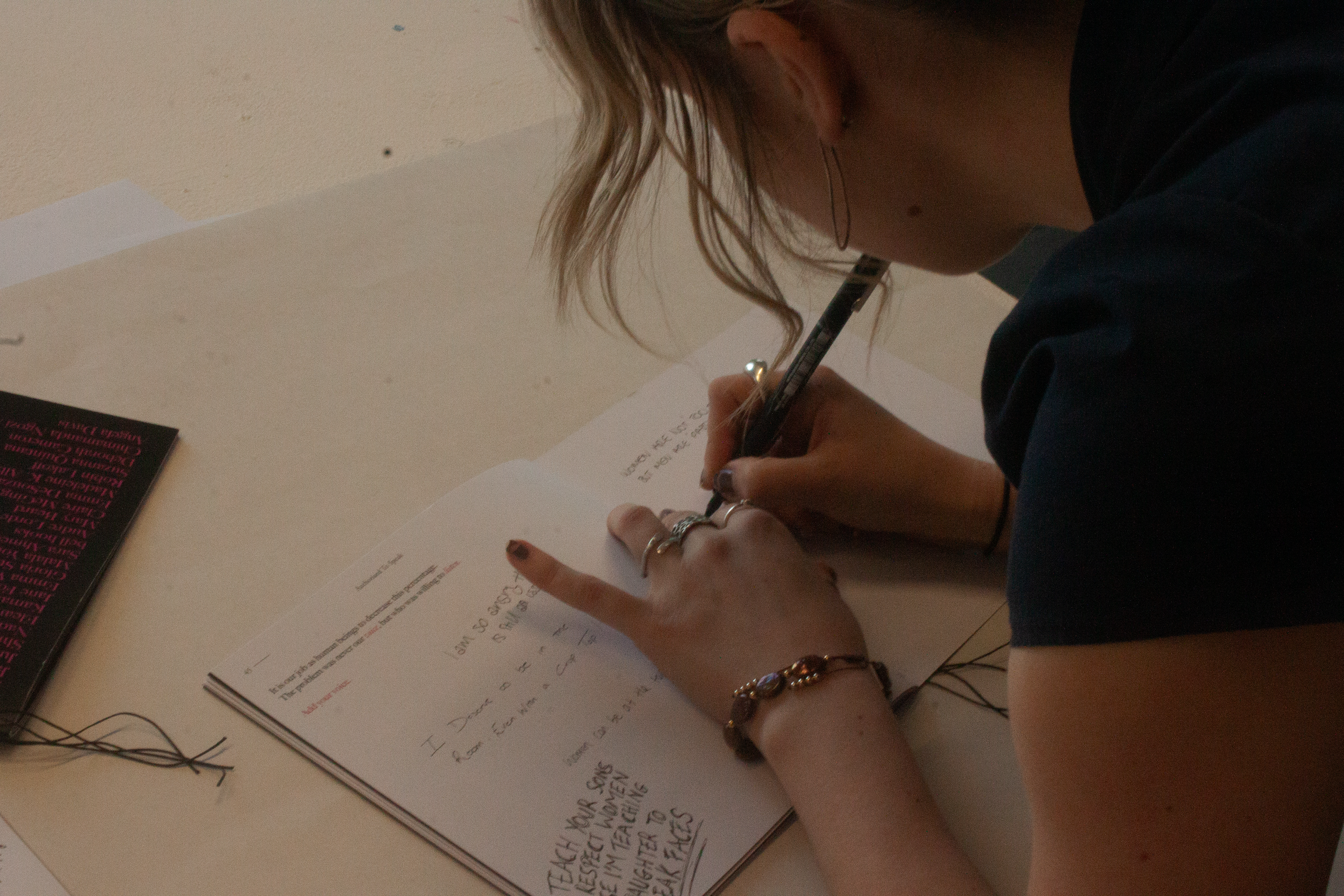
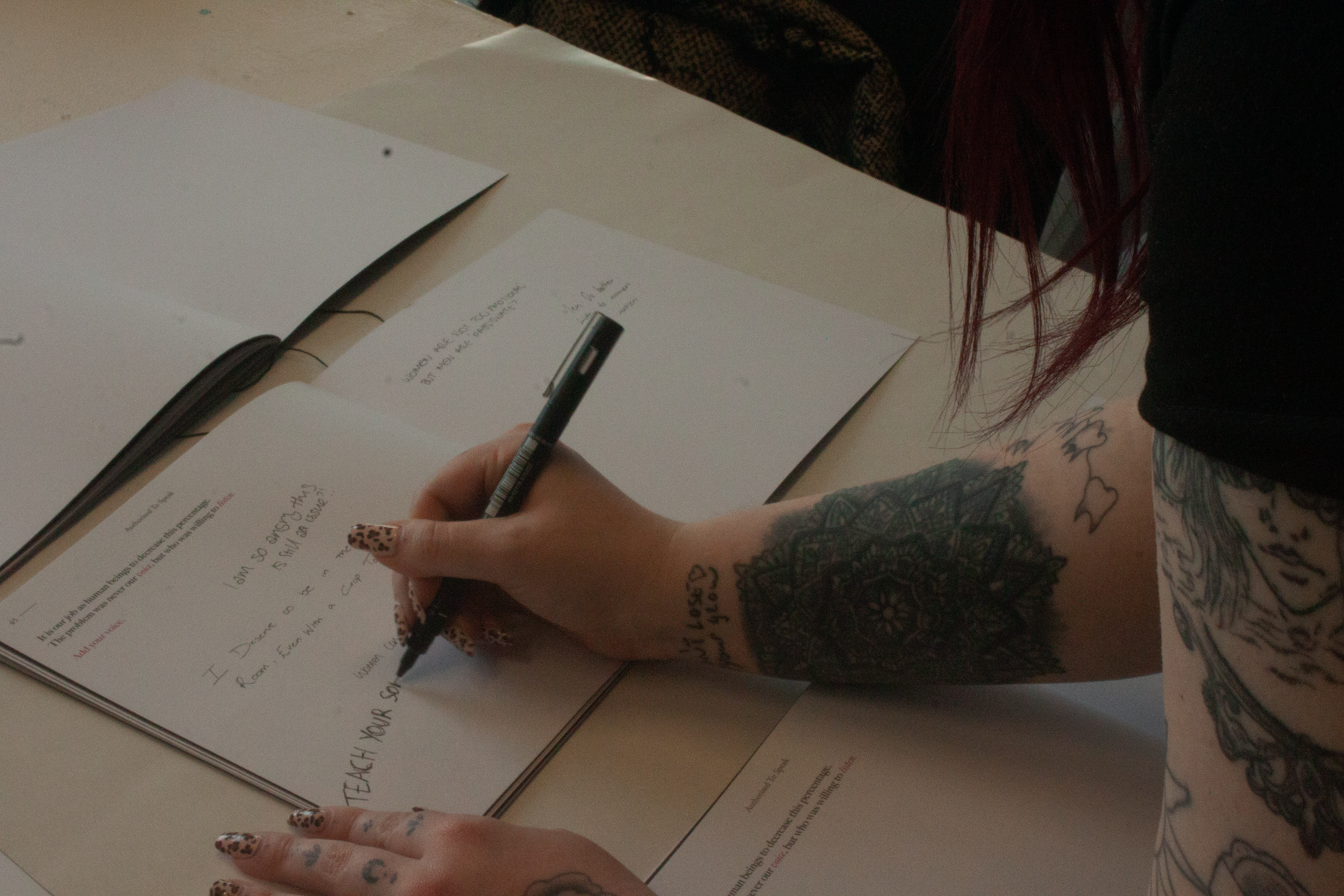
As this issue remains unresolved, I have intentionally left the publication unfinished. The final spreads open up a space for dialogue, inviting the reader to share their own experiences, thoughts, and reclaim their voice. This deliberate disruption of the grid system acts as a rejection of the institutional structures that have historically and contemporary failed to accommodate women.